- All products
- Trending
-
Shop by Category
- Acrylic displays
- Brochure holders
- Notice boards & Corkboards
- A frames & Pavement signs
- Poster & Sign frames
- Glass display showcases
- iPad stands
- Clip frames & Snapframes
- Poster stands
- Queue & Crowd barriers
- Shopline store fixtures
- Exhibition displays
- Hospitality industry displays
- Charging stations
- TV stands & Digital signage
- Display & Artist easels stands
- Lecterns & Podiums
- Museums displays & Gallery displays
- Safety range
- Poster light boxes & Displays
- Paper display furniture
- Sit stand desks
- Menu blackboards
- Flag banners & Event flags
- Outdoor cigarette bins
- Whiteboards
- Retractable banners
- Sign shop supplies
- Real estate signs
- Digital signage solutions
- Church & Community signs
- Office & Corporate supplies
- Window displays
- Outdoor displays & Signage
- Pos signs / Ticket holders
- Hardware & Accessories
- Hand sanitising stations
- Cable hanging systems
- Educational displays
- Chalkboards & Marker boards
- Business support essentials
- Custom print service
- Specials
- Customer service

Choose the Right LED Screen Size
14/10/2025
Share the Post:


Get the size right the first time—balance viewing distance, pixel pitch, content, and budget. Use our quick calculator and venue recommendations below.
Quick LED Size & Pitch Calculator
Enter a typical viewing distance and we’ll suggest a pixel pitch range and a practical screen height.
Guidance only. On‑site survey recommended before ordering.
What is LED?
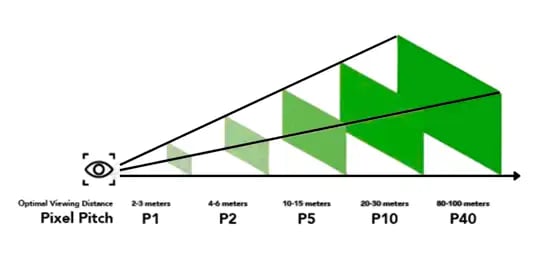
LED stands for light‑emitting diode. An LED display is built from many small LED pixels mounted on modules, which assemble into cabinets and then into a seamless wall. Pixel pitch (e.g., P1.5, P2.9) indicates the distance between pixel centres and directly relates to viewing distance and perceived resolution.
Indoor vs Outdoor LED
- Indoor: Closer viewing, finer pixel pitch (≈ P1.2–P2.9 typical), and moderate brightness (≈ 500–1,200 nits). Quiet operation and front‑service options suit meeting rooms and retail.
- Outdoor: Built to fight sunlight with very high brightness (≈ 5,000–10,000 nits) and weather protection (look for IP65+). Suitable for billboards, façades, and stadiums.
Aspect Ratios & Resolution
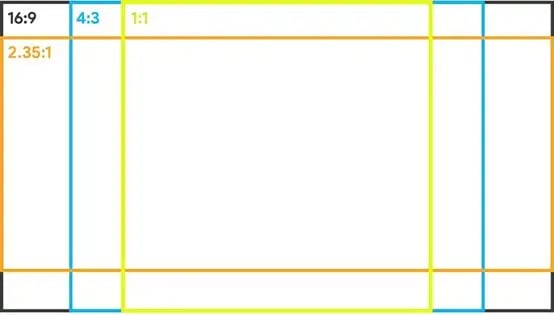
Aspect ratio is the width‑to‑height proportion of your screen. For video‑first content, 16:9 is most common; for decks and data, 4:3 can maximise vertical space. Creative canvases (1:1 squares, 21:9, or custom) work well with a planned content strategy.
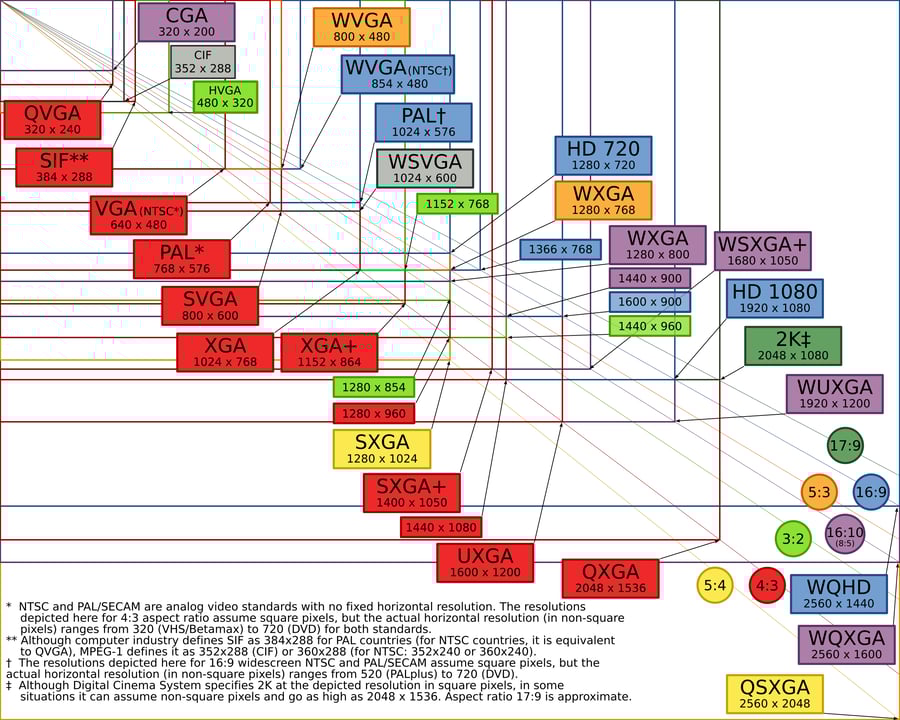
Resolution from pitch & size:
pixels_wide ≈ (width_mm ÷ pitch_mm), pixels_high ≈ (height_mm ÷ pitch_mm)
Example: a 3.2 m × 1.8 m wall at P2.5 is roughly 1280 × 720 pixels (HD)
Recommended Sizes by Venue
Use these starting points, then tailor to your space and content.
| Venue | Typical size (WxH) | Pitch | Notes |
| Retail windows & reception | 2.5–4.0m × 1.4–2.2m | P1.5–P2.9 | High legibility at short distances; favour 16:9 for brand video. |
| Meeting & training rooms | 2.0–3.6m × 1.1–2.0m | P1.2–P2.5 | Choose 4:3 for slides/data or 16:9 for video‑first use. |
| Events & stages (300–800 pax) |
4.6–6.0m × 2.6–3.4m | P2.9–P4.8 | Often spans ~70% of stage width; add side IMAG screens for sightlines. |
| Outdoor signage | 6–12m × 3–6m | P6–P10 | Design for daylight contrast and viewing from traffic distances. |
Implementation Tips
- Leave 500–800 mm rear/side clearance for service, or select a front‑service system.
- Specify brightness by environment (e.g., 600–800 nits indoor; 4000+ nits outdoor).
- Confirm power, data paths, and mounting structure early to avoid re‑work.
Set Up A LED Media Wall
Please click the button below to calculate the cost

Ready to Scope Your Screen?
Our Australian team can help you size, spec, install, and support LED walls nationwide.